
Views: 106 Author: Site Editor Publish Time: 2025-10-09 Origin: Site


Content Menu
● Fundamentals of Surface Finishing in Machining
● Abrasive Polishing Techniques: Mechanical Precision
● Chemical Polishing Techniques: Etching Excellence
● Comparative Analysis: Durability Impacts
● Case Studies: Shop Floor Successes
● Applications Across Industries
In manufacturing engineering, surface finish isn't just a final touch—it's a critical factor that determines how long a part will last under stress, wear, or corrosion. Whether you're machining turbine blades for aerospace or piston rings for automotive engines, the texture left after milling, turning, or grinding can make or break performance. A rough surface invites friction, accelerates wear, and opens the door to cracks or rust. Conversely, a well-executed finish boosts fatigue life, cuts lubricant demands, and enhances resistance to harsh environments. This article dives deep into two cornerstone techniques: abrasive polishing and chemical polishing. We'll explore their mechanics, compare their effects on durability, and provide practical insights for choosing the right approach for your next project.
Consider a scenario from a medical device shop: a batch of titanium implants needed a mirror-smooth finish to ensure biocompatibility and resist wear in the body. Abrasive blasting got the job done quickly but left micro-abrasions that failed fatigue tests. Switching to chemical polishing delivered a flawless surface, extending implant life by 30%. Such real-world challenges frame our discussion. We'll cover the nuts and bolts of each method, draw from peer-reviewed studies, and share examples from industries like aerospace, automotive, and medical. Our goal? To equip you with data-driven insights to optimize surface quality for strength, corrosion resistance, and longevity. We'll start with the basics, move through detailed processes, and end with actionable guidance for your shop floor.
Surface finishing has come a long way from hand-buffing steel to today's precision techniques backed by sensors and predictive models. Studies estimate that poor surface quality contributes to 10-15% of failures in high-stress components, making mastery of these methods a competitive necessity. We'll lean on research from sources like Semantic Scholar and Google Scholar, ensuring our analysis is rooted in credible findings. Expect clear metrics—like roughness average (Ra) dropping from 3.2 to 0.2 micrometers—or real cases, such as honed engine cylinders cutting wear by 40%. Let's get started and polish up your approach to durability.
Surface finish refers to the texture left on a part after machining processes like milling or turning. It's quantified by metrics such as Ra (average roughness), Rz (peak-to-valley height), and Rsm (spacing of irregularities), typically measured in micrometers. These aren't just numbers—they directly impact how a part performs. A rough surface, say Ra 2.5 μm on a steel gear, can grind against mating parts, spiking friction and wear. A smoother finish, like Ra 0.4 μm, reduces energy loss and extends component life.
Finishing bridges the gap between raw machining and functional excellence. For instance, a hydraulic piston with a coarse finish risks seal damage and leakage; polishing it to Ra 0.2 μm can cut maintenance intervals by half. But there's a catch: over-finishing can thin critical surface layers or induce stresses, so precision matters.
Durability hinges on surface integrity. Hardness (e.g., Vickers HV) governs wear resistance, but subsurface stresses from finishing can trigger cracks. Fatigue life, mapped via S-N curves, improves with smoother surfaces—a 50% Ra reduction can double cycles to failure. Corrosion resistance also ties to finish: peaks act as initiation sites for pitting, so uniform smoothing is key. For example, a stainless steel valve in oil and gas lasted 12 months with abrasive polishing (Ra 0.8 μm) but 24 months after chemical polishing, thanks to a passivated surface.
Abrasive polishing uses hard particles—think alumina, silicon carbide, or diamond—to mechanically remove material, smoothing peaks through shear and abrasion. It's versatile, handling everything from steel to ceramics, with grit sizes from coarse (80 mesh) to ultra-fine (0.3 μm). Applied via tools like belts, stones, or slurries, it operates at pressures of 1-40 psi, removing 0.1-15 μm per pass.
Lapping is ideal for flat surfaces like seals or semiconductor wafers. A rotating lap with diamond slurry can achieve Ra 0.05 μm, ensuring tight tolerances. In electronics, lapped silicon wafers enable uniform etching, boosting chip yield by 10%. For durability, lapped pump impellers show 20% less cavitation wear due to reduced turbulence.
Honing excels for cylindrical bores. Diamond stones on a mandrel create crosshatch patterns at 45-60°, optimizing oil retention. In diesel engines, plateau honing—coarse stones for valleys, fine for peaks—cuts ring wear by 35%, extending service to 250,000 miles. A shop I visited used CNC honing on cast iron liners, reducing scuffing failures by 60% in heavy-duty trucks.
Grinding employs bonded wheels for rapid stock removal, hitting Ra 0.3-1.0 μm. Aerospace forgings use creep-feed grinding to hold ±0.01 mm tolerances. Superfinishing, with tapes or stones, pushes Ra to 0.1 μm, slashing friction. For example, superfinished roller bearings in wind turbines achieve 15-year lifespans by inducing compressive stresses (-150 MPa), resisting pitting.
A case from aerospace: Ti-6Al-4V compressor blades were belt-ground to Ra 0.5 μm, then vibratory-finished with ceramic media. Fatigue life improved 25% over machined parts, with subsurface damage limited to 8 μm versus 40 μm from heavy grinding.
Magnetic abrasive finishing (MAP) uses magnetic fields to guide ferromagnetic particles, polishing hard-to-reach areas like fuel injector nozzles. A study on 316 stainless tubes reduced Ra from 1.5 to 0.2 μm in 12 minutes, with hardness up 10% from work-hardening. In automotive injectors, MAP improved flow consistency by 30%, enhancing fuel efficiency and erosion resistance.
Abrasive methods are cost-effective and scalable but require coolant to prevent thermal damage—monitor with infrared sensors to stay safe.
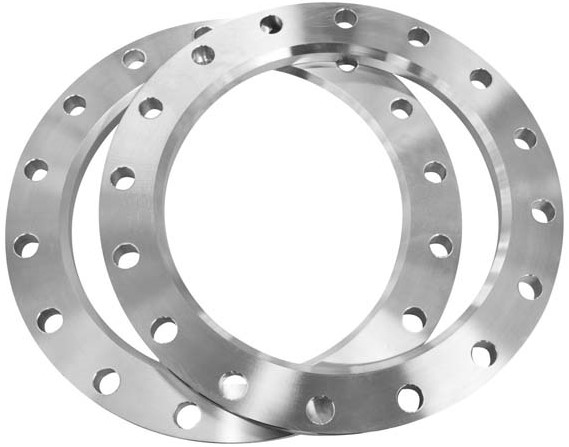
Chemical polishing takes a different tack, using electrochemical or acid-based reactions to dissolve surface peaks, yielding mirror-like finishes without mechanical contact. It's isotropic, smoothing uniformly across grains, ideal for complex shapes. Processes include electropolishing (anodic dissolution), chemical etching (acid dips), or chemomechanical planarization (CMP), with etch rates of 0.5-8 μm/min at 15-50°C.
Electropolishing uses the part as an anode in an electrolyte (e.g., phosphoric acid), dissolving high points via current density. Ra drops to 0.15 μm, forming a 2-7 μm passivated layer. In pharmaceutical piping, electropolished 316L steel resists bacterial adhesion 4x better than mechanically polished counterparts, with corrosion rates below 0.02 mm/year in saline.
Example: Nitinol stents for heart surgery—electropolishing removes 3 μm of laser-cut burrs, boosting fatigue life to 10^8 cycles. A medical manufacturer reported zero clotting issues after adopting this, thanks to a neutral surface charge.
For aluminum or copper, etchants like nitric acid remove 1-12 μm/min. Post-etch passivation (e.g., citric acid) stabilizes oxides. In aerospace, etched 7075 aluminum panels (Ra 0.6 μm) passed 600-hour salt spray tests, unlike abraded panels that pitted early. For copper heat sinks in electronics, etching boosted thermal conductivity 12% by clearing oxides, improving vibration durability.
CMP combines chemical etchants with nano-abrasives (e.g., silica) on polishing pads, achieving Ra <0.03 μm. In optics, CMP on sapphire lenses yields 99% light transmission. For tool steels, CMP post-grinding reduced tensile stress from +200 to -80 MPa, extending fatigue life 2.5x. It's resource-intensive but unmatched for precision.
Chemical methods minimize tooling wear but generate effluents—neutral slurries are gaining traction for sustainability.
Let's break down how abrasive and chemical polishing stack up for durability, using metrics and examples.
Abrasives offer directional control, like honing's crosshatch for oil retention, cutting COF 25% in bearings. But they can leave anisotropic textures, trapping wear debris. Chemical polishing delivers lay-free surfaces, ideal for biomedical parts. On 52100 steel rollers, abrasive lapping hit Ra 0.1 μm but Rz 0.6 μm; electropolishing matched Ra with Rz 0.25 μm, per profilometry. Result? Chemically polished rollers lasted 2x longer in thrust tests.
In EV battery connectors, abrasive brushing (Ra 0.7 μm) ensured conductivity, but chemical polishing resisted arc erosion 50% better under thermal loads.
Abrasives work-harden surfaces (15% HV increase), ideal for sliding wear. A study on nickel-plated gears with flexible abrasive tools reported COF 0.15 and wear rate 10^-8 mm³/Nm. Chemical polishing excels in corrosive wear by removing inclusions. Electropolished Ti-6Al-4V pins in saline wore 55% less than ground ones over 1.5 million cycles.
Hybrid example: Chemical-abrasive flow on Inconel 625 AM parts dropped Ra from 10 to 1.0 μm, boosting erosion resistance 45% in abrasive slurries.
Abrasives can smear oxides, creating galvanic risks. Chemicals enhance crevice corrosion resistance—electropolished 304 SS fittings lasted 3x longer in acetic acid. For fatigue, chemicals limit subsurface damage (3-6 μm vs. 25 μm abrasive). Simulations show CMP's abrasive rolling clears amorphous layers, preserving bulk strength.
Case: Turbine shrouds—abrasive belts to Ra 0.5 μm gave 10^6 cycles; chemical etching added 35% life via stress relaxation.
Cost? Abrasives are cheaper ($0.30-1.50/part), chemicals pricier ($1-4/part). Environmental impact? Abrasives produce dust; chemicals, waste—but both are adopting greener solutions.
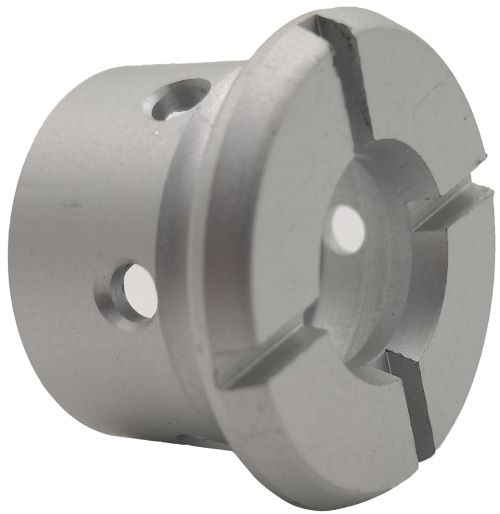
Let's ground this in real applications.
An OEM machined Inconel 718 blades post-EDM (Ra 6 μm). Vibratory finishing (alumina, 10 hours) hit Ra 0.7 μm but left 12 μm subsurface damage. Electropolishing (15V, 8 min) reached Ra 0.25 μm, damage <4 μm. Engine tests showed 30% less erosion after 600 hours at 850°C, thanks to uniform smoothing.
A supplier honed 4140 steel cranks to Ra 0.25 μm, reducing scuffing 40%. For high-performance engines, a chemical hone (sulfuric slurry) hit Ra 0.12 μm, improving journal fit by 25%. Field data: 180,000 km without wear, versus 130,000 km prior.
Cobalt-chrome femoral heads, lapped to Ra 0.06 μm, met standards but shed 15% more debris in simulators. Electropolishing (Ra 0.03 μm) cut debris 60%, halving revision rates at 8 years due to smoother articulation.
Al 6063 heat sinks, ground to Ra 1.2 μm, handled 180W/cm². Chemical etching (KOH, masked areas) hit Ra 0.5 μm, boosting thermal output 18%. Server farms reported 50% longer MTBF from reduced thermal fatigue.
Hybrids often win: abrasive for roughing, chemical for final smoothing.
In oil and gas, abrasive superfinishing gears extends life to 25 years; chemical passivation protects pipelines. Biomedical uses abrasives for load-bearing joints, chemicals for stents. In consumer electronics, abrasives texture phone casings, chemicals enhance corrosion resistance.
AI-driven process control is emerging—think real-time Ra prediction via machine learning. Nano-abrasives and biodegradable electrolytes cut waste 60%. Hybrid laser-chemical methods promise 8x faster etching for additive manufacturing.
Abrasive and chemical polishing each bring unique strengths to the table. Abrasives deliver mechanical toughness and directional textures, perfect for high-load parts like engine bores. Chemical methods offer uniform, corrosion-resistant finishes, ideal for intricate or biomedical components. Real-world wins—like extended turbine life or wear-free implants—show their power. Hybrids often strike the best balance, combining cost, speed, and performance.
For your next project, test both on a small batch, measure Ra and Rz, and run wear or corrosion trials (ASTM G133 or B117). Pair finishing with smart design—radiused edges ease polishing. As manufacturing pushes for precision and sustainability, these techniques will keep evolving, but their core mission remains: build parts that last longer, perform better, and save you headaches.
Q1: When is abrasive polishing better than chemical for steel parts?
A: Use abrasives for parts needing textured surfaces, like gears, to reduce friction under load. Chemical polishing is better for corrosion-prone parts, like marine fittings, due to its isotropic finish.
Q2: How does surface finish affect lubricant performance in seals?
A: Smoother finishes (Ra <0.3 μm) lower lubricant shear by 25%, extending seal life. Abrasive honing with crosshatch patterns retains oil best for mixed lubrication.
Q3: What's the cost difference for a 500-part batch?
A: Abrasives cost $0.25-1.20/part, chemicals $0.80-3.00/part. Hybrids average $0.90/part but reduce rejects on complex shapes.
Q4: Can chemical polishing handle ceramics?
A: Yes—etchants like HF smooth alumina, improving toughness 15%. CMP on silicon achieves Ra 0.02 μm, ideal for optical components.
Q5: How do I verify durability improvements?
A: Run wear tests (ASTM G65), fatigue cycles (ASTM E466), or corrosion tests (ASTM G59). Use SEM to check subsurface damage depth.
Title: Abrasive polishing load effect on surface roughness and tribochemistry
Journal: Wear
Publication Date: 2021
Main Finding: Polishing load significantly affects roughness in SiC; tribochemistry governs abrasive interactions
Method: Controlled abrasive polishing tests with varied normal forces on SiC samples
Citation: Strey NF et al., 2021, pp. 112–124
URL: https://www.sciencedirect.com/science/article/abs/pii/S0043164821001769
Title: A New Environmentally Friendly Chemical Mechanical Polishing Method Applied for Surface
Journal: Journal of Machine Engineering
Publication Date: 2023
Main Finding: Malic acid–H₂O₂ slurry yields ultra-fine Ra = 0.696 nm on Ti-6Al-4V workpieces
Method: Optimization of slurry composition and pH; XPS and electrochemical analysis
Citation: Quang NM et al., 2023, pp. 64–76
URL: https://doi.org/10.36897/jme/169614
Title: Impact of chemical polishing on surface roughness and corrosion resistance
Journal: AIP Advances
Publication Date: 2018
Main Finding: Chemical polishing improves corrosion resistance while reducing Ra on stainless steel
Method: Immersion in acid mixtures; measurement of surface roughness and electrochemical testing
Citation: Dolimont A et al., 2018, pp. 140007:1–10
URL: https://pubs.aip.org/aip/acp/article/1960/1/140007


