
Views: 105 Author: Site Editor Publish Time: 2025-12-12 Origin: Site


Content Menu
● Common Defects Encountered in CNC Operations
● Structuring Quality Gates in the Process Flow
● Tools and Methods for Effective Inspections
● Involving the Team in Gate Execution
● Real Applications and Outcomes
● Tracking and Refining the System
● Q&A
Manufacturing engineers deal with tight tolerances every day in CNC shops. Parts need to meet specs down to microns, and any slip can lead to scrap, rework, or worse—customer complaints after delivery. Quality gates help stop those issues early. These are set checkpoints in the production flow where teams check specific features against criteria before moving forward.
The approach makes sense for precision work. Defects caught during machining cost far less to fix than ones found later. Shops running aerospace or medical components know this well—regulations demand traceability and zero escapes. Even in general job shops, layered checks build reliability into the process.
Research backs this up. Reviews of monitoring systems show that combining sensor data with targeted inspections reduces variability in surface finish and dimensions. Other work on vibration-based quality control highlights how early alerts prevent chatter-induced roughness. And studies on AI-assisted prediction demonstrate gains in detecting tool wear before it affects parts.
This article covers common defects first, then how to structure gates, tools for checks, team involvement, real applications, and ways to track improvements. Examples come from actual shop experiences and published findings. The goal is practical steps anyone can adapt to their floor.
Defects show up for various reasons in CNC work. Tool wear leads the list—edges dull over cuts, causing poor finish or size drifts. One shop milling stainless manifolds saw bore diameters creep 0.03mm from worn inserts, only noticed after assembly fits failed.
Surface issues follow close. Chatter leaves wavy patterns, especially on thin walls or long overhangs. A turbine component run had Ra values double the spec because of unstable frequencies. Built-up edge on aluminum creates torn surfaces, while improper coolant flow causes thermal cracks in hard materials.
Burrs and flash persist too. Exit points on drills or mills leave sharp edges if feeds aren't optimized. In hydraulic fittings, leftover burrs blocked ports, triggering field failures.
Dimensional errors stem from thermal growth, fixture slip, or programming offsets. Long runs on steel brackets showed 0.05mm expansion from spindle heat. Material inconsistencies add trouble—voids in castings propagate during facing.
Subsurface problems like cracks hide until testing. High-speed milling of titanium often induces residual stresses leading to distortion post-machining.
These match findings in reviews: chatter, wear, and roughness dominate quality diagnosis challenges. Vibration monitoring studies confirm chatter as a primary roughness driver.
Spotting patterns helps prioritize gates. Track pareto of rejects to focus efforts.

Quality gates work best when mapped to risk points. Start with incoming material verification—check certs, hardness, and ultrasonics for internals.
Next, first article inspection after setup. Full layout confirms programming and fixturing.
In-process gates come during operations. After roughing, probe key locations on-machine. For deep pockets, check depths mid-cycle to catch deflection.
Post-operation checks per feature: air gauging bores, optical for flats.
Final gate before packing: comprehensive scan, functional tests, packaging review.
Make criteria clear—go/no-go with tolerances listed. Tie to FMEA scores for frequency.
Example from aerospace blades: gate after semi-finish verifies airfoil thickness with laser; adjusts offsets if needed. Reduced final rejects significantly.
Another in automotive gears: vibration thresholds trigger hold after hobbing, linking to chatter studies.
Digital tools help—on-machine probing feeds data directly.
Scale by volume: manual for prototypes, automated for series.
Basic gauges handle quick checks. Pin sets for holes, thread plugs for taps.
CMMs provide detailed mapping offline. Zeiss or Hexagon units scan geometries against CAD.
On-machine probes like Renishaw touch or laser for in-cycle measurements.
Vision systems spot visuals fast. Keyence cameras detect burrs on loaded parts.
Non-contact options: CT scans for internals, profilometers for roughness.
Emerging: vibration sensors predict issues, per monitoring reviews.
Integrate data—SPC software trends results.
Calibration schedules keep accuracy.
Mix based on needs: probes for speed, CMM for complexity.
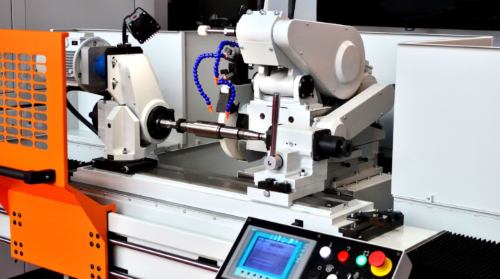
Operators run many gates, so training matters. Hands-on sessions on probes, gauge use.
Daily reviews of previous catches build ownership.
Rotate inspection duties for consistency.
Link metrics to feedback—pass rates visible on boards.
One plant cut escapes after making operators sign gate sheets.
Tie to culture: celebrate early catches as saves.
Gear production: gates with gear analyzers post-finish, plus in-process vibration. Scrap down, matching adaptive findings.
Turbine parts: laser scanning mid-process caught profile errors early.
Medical implants: ultrasonic pre-machining avoided void propagation.
Hydraulic blocks: vision for port cleanliness reduced assembly issues.
Results align with reviews—monitoring cuts defects markedly.
Monitor yield per gate, escape rates.
SPC charts spot trends.
Annual FMEA updates adjust gates.
Feed customer data back.
Continuous tweaks keep effectiveness high.
Quality gates turn reactive shops proactive. By checking at stages with right tools and team buy-in, defects stay on the floor instead of shipping. Examples from gears to implants show real reductions in waste and risks. Start with high-risk features, measure results, expand. Combined with monitoring advances, this builds consistent output. Shops implementing these see better yields, happier customers, stronger margins. Review your flow, add a gate, track the difference—it adds up fast.
Q1: What's a simple first quality gate for a new job?
A: Do full first article with CMM or gauges, document all features, approve before running more.
Q2: How to balance gate time against throughput?
A: Use on-machine probes for minimal interruption; data shows payback in reduced scrap.
Q3: Can small shops afford advanced inspection?
A: Start with manual gauges and basic probes; upgrade as volume justifies.
Q4: How often recalibrate tools for gates?
A: Follow manufacturer schedules, typically daily for probes, annual for CMMs.
Q5: What if material variability causes gate fails?
A: Tighten incoming checks, segregate suppliers, adjust parameters per batch.


