
Views: 105 Author: Site Editor Publish Time: 2025-12-11 Origin: Site


Content Menu
● Understanding Batch Dynamics and Cost Breakdown
● Setup Reduction That Actually Works
● Tooling Strategies for Long Batches
● Programming Tactics That Drop Cycle Time 15–30 %
● Automation and Lights-Out Considerations
● Coolant and Chip Management at Volume
● Frequently Asked Questions (FAQ)
Most shops live or die by their per-unit numbers. When you move from one-offs and prototypes into real batch work—50 pieces, 200 pieces, sometimes a few thousand—the rules change completely. The same habits that made you money on short runs suddenly start bleeding cash once volume goes up. Setup time that felt acceptable on a five-piece order becomes a disaster when it's repeated across hundreds of parts. Tool wear that you barely noticed on prototypes now shows up as real money on the shop floor report.
I've spent the last fifteen years running CNC departments, quoting jobs, and cleaning up cost overruns. The pattern is always the same: the first batch looks fine, the second batch is late, and by the third batch everyone is arguing about why the quoted price no longer makes sense. The fix is almost never “work harder” or “buy a faster spindle.” It's almost always a handful of deliberate batch-production strategies that spread fixed costs, control variables, and keep the machines cutting instead of waiting.
This article pulls together the methods that actually move the needle in real shops. Everything here has been used on production floors running Haas, DMG Mori, Mazak, and Okuma equipment, making parts from 6061 aluminum to 17-4 stainless to titanium 6Al-4V. The examples are from aerospace suppliers, medical device manufacturers, automotive Tier 1s, and general job shops—places where missing a margin by two dollars per part can kill the job.
We'll walk through setup reduction, tooling choices, programming tactics, automation that actually pays back, and the less-obvious levers like material staging and coolant management. All of it is aimed at one thing: driving the fully burdened cost per piece down far enough that you can quote aggressively and still sleep at night.
In batch work the cost equation has three main terms:
Fixed costs per batch (programming, proven program, fixtures, first-article inspection)
Semi-fixed costs per setup (tool preset, work offset touch-off, indicator sweeping)
Variable costs per part (cycle time, tool wear, coolant, electricity, scrap)
When the batch is small the fixed and semi-fixed terms dominate. When the batch gets large the variable term takes over. The sweet spot is usually 80–800 pieces, depending on part complexity and material.
A typical example is an aluminum electronics enclosure, 120 mm × 80 mm × 40 mm, 3 mm wall thickness, 50 parts per month. With conventional vises and individual tool length offsets the setup ate 3.8 hours. That alone added $228 to the batch, or $4.56 per part before a single chip was made. Change to a dovetail pallet system and preset tools offline, and the same job drops to 1.1 hours of setup—$1.32 per part. The material and cycle time didn't change, but the job instantly became profitable.
The same logic scales. A medical implant shop running 300 pieces of 316L stainless switched from flood coolant to through-tool minimum quantity lubrication. Tool life went from 45 parts per edge to 130 parts per edge and surface finish improved enough to eliminate a benching operation. Total savings: $11.80 per part on a part that sells for $84.
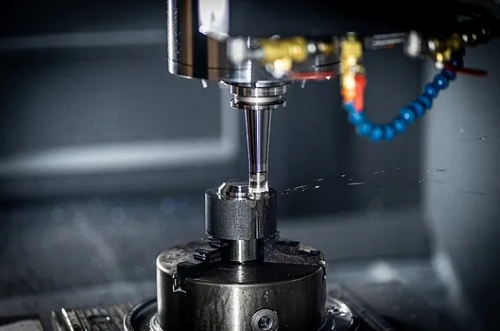
The fastest way to cut per-unit cost is still to attack setup time. Single-Minute Exchange of Die (SMED) principles translate directly to CNC work.
Separate internal from external tasks. Anything you can do while the machine is still cutting the previous job is free time:
Preset all tools in the tool crib using a Z-zero presetter
Build the next fixture on a second base plate while the current one is in the machine
Load the next proven program and graphic checklist onto the control
Standardize everything possible. One Midwest shop went from 14 different vise models down to two (a 150 mm Kurt-style and a 100 mm Schunk zero-point). Setup instructions dropped from six pages to one laminated sheet. Average mill setup went from 52 minutes to 17 minutes across 400 different part numbers.
Use multi-part fixtures aggressively. A 4-cavity dovetail fixture on a vertical mill turns a 12-minute part into a 3.2-minute part from spindle-on to spindle-off because four parts come off with one door cycle. The fixture cost is paid off in the first two batches.
Quick-change receiver systems (Lang, Jergens Ball-Lock, Erowa) routinely pay for themselves in under six months on batches larger than 100 pieces.
Tool cost per part = (tool price ÷ parts per edge) + regrind cost + change time
The cheapest tool is rarely the lowest-cost-per-part tool. A $28 carbide end mill that lasts 180 parts beats a $9 import that lasts 35 parts every single time.
Group parts by material family and run them back-to-back. Seasoning effect on coated carbide can add 20–40 % extra life once the coating stabilizes. Running all 7075 jobs in a week instead of spreading them across a month routinely adds 25 % tool life.
Use sister tools intelligently. Load two or three identical tools and let the control switch automatically when wear reaches a limit. A turbine blade shop running Inconel 718 batches of 120 pieces cut tool-change downtime by 84 % and kept surface finish consistent to the last part.
Through-tool MQL or high-pressure coolant through the spindle pays for itself when the batch exceeds roughly 150 pieces of stainless or titanium. The plumbing cost is fixed; the benefit scales with volume.
Modern CAM is the biggest free lunch left in CNC:
Adaptive clearing / constant engagement roughing keeps cutting forces steady and typically cuts roughing time 25–40 %.
Trochoidal slotting for deep grooves in hard materials routinely cuts slotting time in half compared to conventional methods.
Rest machining with smaller and smaller tools only where material remains eliminates air cutting.
High-efficiency finish paths (Mastercam Dynamic, Fusion 360 Steep & Shallow) often eliminate secondary semi-finish passes entirely.
Always simulate with stock tracking turned on. Ten minutes of simulation routinely saves hours of proved-out time and prevents crashes that can ruin an entire batch.
Write reusable templates and tool libraries. A shop making hydraulic manifolds created a template that auto-populates 32 common hole sizes and thread mills. Programming time dropped from 4 hours to 25 minutes per new variant.
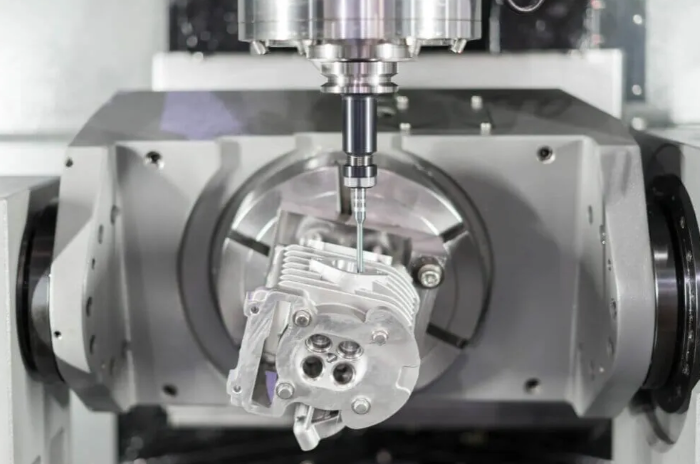
A six-axis cobot with a dual gripper and a 48-position pallet rack costs about the same as one year's salary for a setup machinist. On batches larger than 250 pieces it usually pays for itself in 9–14 months through unattended runtime.
Bar feeders on lathes routinely add 4–6 hours of unattended time per night on 300–800 piece runs.
Even simple pallet pools (Midaco, Fastems 5-pallet system) on vertical mills turn a 9-hour attended shift into 22 hours of spindle time without adding headcount.
The key is not full lights-out from day one. Start with attended automation on second shift, then move to partial lights-out once the process is bulletproof.
Flood coolant works fine for short runs but becomes expensive at volume. Disposal, filtration maintenance, and coolant concentration drift all add hidden cost.
Minimum-quantity lubrication with through-tool air/oil mist routinely cuts fluid cost 60–80 % and eliminates coolant-related dermatitis claims. One orthopedic implant shop making 400-piece batches of CoCr knee components dropped total fluid spend from $2.10 to $0.38 per part after switching to MQL.
Chip management is equally important. High-pressure coolant or chip blasters keep the cutting zone clear and prevent re-cutting, which is the silent killer of tool life in aluminum batches. A 70-bar pump pays for itself in two or three 500-piece runs of 6061 or 7075.
Everything we've covered—setup reduction, standardized tooling, modern programming, sensible automation, and disciplined coolant strategy—works together as a system. Pick one or two items and you'll see incremental gains. Implement most of them and the cost per part typically drops 20–40 % while lead time and quality both improve.
The shops that win the profitable batch work aren't the ones with the newest five-axis machines. They're the ones that treat every minute of setup, every tool edge, and every kilowatt-hour as money that belongs to them unless they deliberately give it away.
Start with the biggest pain point in your current batch jobs. Measure it brutally for one month, apply the matching tactic from this article, measure again. The numbers never lie, and once they usually improve faster than anyone expects.
Keep the spindles turning and the costs falling.
Q1: How many parts justify a custom fixture instead of soft jaws?
A: Rough rule of thumb: if total quantity across all runs of that part family exceeds 120 pieces in 24 months, a hard fixture or dovetail system pays off.
Q2: Is MQL worth it on aluminum?
A: Yes, especially above 200 pieces per batch. It eliminates sticky chips, improves surface finish, and removes coolant maintenance entirely.
Q3: What's the fastest way to cut programming time on repeat jobs?
A: Build a master template with tool library, stock sizes, and proven feeds/speeds. New similar parts take 15–30 minutes instead of hours.
Q4: When does a cobot or pallet pool actually pay back?
A: Usually 8–14 months on batches regularly over 200 pieces or when you're paying overtime to keep up with demand.
Q5: How do I convince management to spend money on tooling that costs more up front?
A: Run a side-by-side test on one job for one month. Track parts per edge and total cost per part. The data always wins the argument.


