

This handbook addresses thermal management in precision machining, focusing on optimizing feed, speed, and coolant to minimize heat-induced distortions. With practical strategies and real-world titanium and superalloy examples, it equips engineers to enhance part accuracy and efficiency.

This blueprint guides manufacturing engineers in selecting lubricants for ferrous and non-ferrous machining. It contrasts EP-heavy fluids for steel with clean, anti-stick options for aluminum, using shop examples and research to drive efficiency, precision, and sustainability.

Effective chip management is vital for machining efficiency and part quality. This guide details strategies to optimize chip evacuation—tool designs, coolant systems, and parameter tuning—while protecting surfaces. Real-world cases and research offer practical solutions for materials like titanium and aluminum.

Securing complex geometries for machining without causing warpage is a critical challenge in manufacturing. This article examines elastic deformation, traditional and hybrid fixturing methods, and simulation-driven solutions, using aerospace and medical case studies to guide engineers toward distortion-free precision.

Multi-axis runout in CNC machining undermines precision, risking part quality. This article details detection with dial indicators and laser systems, correction via mechanical alignment and software compensation, and practical case studies. It equips engineers with strategies to achieve sub-0.01 mm tolerances, boosting efficiency.
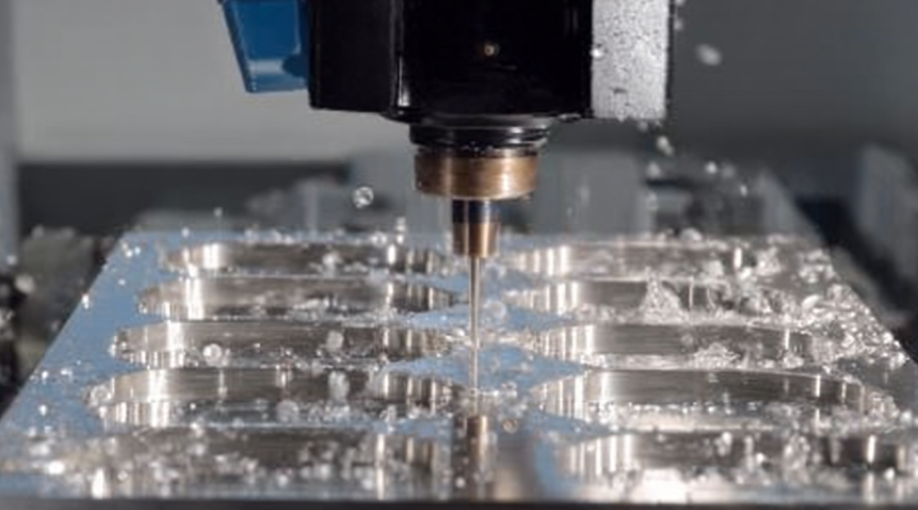
CNC (Computer Numerical Control) machining has revolutionized the manufacturing industry by providing precision and efficiency in the production of complex parts. Among the various processes involved in CNC machining, turning is one of the most fundamental. Turning can be broadly categorized into tw
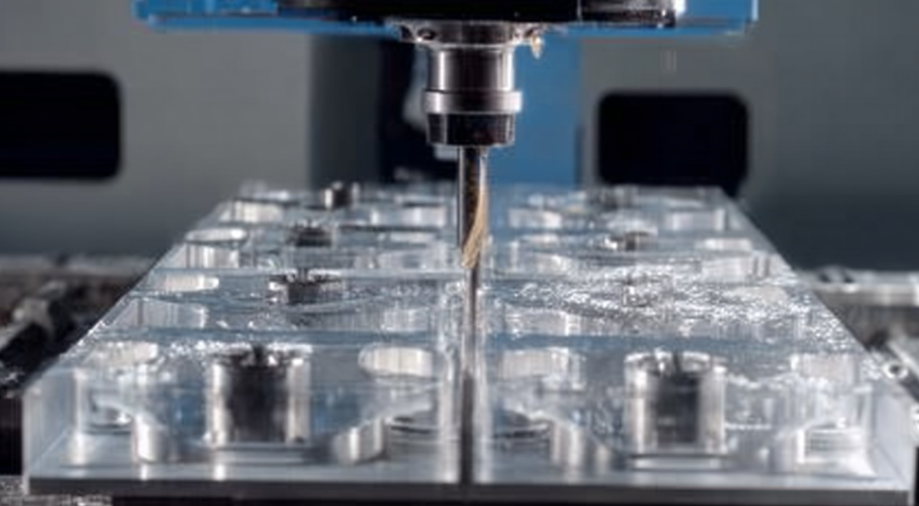
CNC turning is a vital machining process widely used in manufacturing industries. It involves the rotation of a workpiece against a cutting tool to create cylindrical parts. This article explores CNC turning in detail, comparing it with other machining processes, particularly milling. We will delve

CNC milling and turning are two fundamental processes in the field of computer numerical control (CNC) machining. These processes are essential for manufacturing a wide range of components used in various industries, including automotive, aerospace, medical, and consumer goods. This article will exp

CNC milling has revolutionized the manufacturing industry by providing precision and efficiency in the production of complex parts. As industries continue to evolve, the demand for CNC milling fabrication parts has surged. This article delves into the essential aspects of CNC milling fabrication par

CNC machining and CNC turning are two fundamental processes in the world of manufacturing. Both techniques utilize computer numerical control (CNC) technology to produce precise components, but they differ significantly in their methods and applications. This article will explore the distinctions be

CNC (Computer Numerical Control) machining has revolutionized the manufacturing industry by providing precision and efficiency in the production of complex parts. Among the various CNC machining processes, CNC milling and CNC turning are two of the most commonly used techniques. While both processes

CNC (Computer Numerical Control) turning is a vital process in modern manufacturing, allowing for the precise shaping of materials into desired forms. Among the various turning processes, CNC rough turning and CNC finish turning are two fundamental techniques that serve distinct purposes in the mach


